When it comes to healthy hair, store shelves and social feeds are full of promises: hair masks, oils, conditioners and treatments of all kinds guarantee strength and shine. But in reality, one of the best routes to more lustrous locks is through your diet. Let’s look at some important nutrients and how they can benefit your hair.
1. Biotin for shinier locks*
One of the most celebrated nutrients for hair support, biotin is an essential B-vitamin that helps convert food into energy for your body. It plays an important role in making keratin, the protein that makes up most of your hair, so ensuring you have enough is vital. It can help with a shinier mane and even curb nutrient-related hair loss.*
Food sources for biotin:
Eggs, nuts and seeds. When cooking up eggs for hair health, be sure not to nix the yolk as this is the richest source of biotin. Fun fact: Avidin is a protein in egg whites that inhibits the absorption of biotin, BUT when fully cooked, this inhibition is significantly reduced. In other words, cook your eggs not only for food safety but also for the sake of your hair!
2. Vitamin D for healthy hair growth*
One of vitamin D’s lesser-known benefits is hair health. What’s interesting is that your hair follicles actually have receptors to absorb vitamin D. But if you’re one of the 42% of U.S. adults with low levels of the sunshine vitamin, your hair growth can be disrupted, causing weak, thin and dull hair.1 Keeping up your vitamin D levels through food or supplements helps can help keep your hair growth on track.*
Food sources for Vitamin D:
Salmon, sardines, mushrooms and foods fortified in vitamin D.
3. Antioxidants: to keep your scalp healthy*
Antioxidants help mop up harmful free radicals that damage cells in high concentrations, including your scalp cells. These pesky substances result naturally from UV exposure, pollution and even stress. Eating antioxidant-rich foods and maintaining proper hygiene can help counteract their effects by increasing blood circulation to your scalp and promoting normal hair growth.*
Food sources for antioxidants:
Colorful fruits and vegetables like kale, spinach, berries, beets and garlic.
4. Collagen: Your hair’s building blocks
The most abundant protein in your body, collagen plays a vital role in keeping your scalp healthy and providing the building blocks for keratin, the protein that gives your hair substance. With age, your body makes less collagen, so replenishing your stores through diet and supplements is vital to promoting healthy, nourished locks.2,3*
Food sources for collagen:
Animal protein and powders.
5. Zinc for stronger, fuller hair*
This might be surprising since zinc is most often linked to its benefits to your immune system, but this trace mineral is also a powerful antioxidant that can help strengthen and promote a healthy scalp.* Keeping up your zinc levels can help reduce nutrient-related shedding and promote stronger, fuller hair.*
Food sources:
Oysters, shellfish, beef and dairy.
Takeaway
Whether you want strong, voluminous hair or just want to reduce shedding, adding hair-friendly nutrients to your diet can help nourish your mane from within.
Meal ideas to help with hair health
Breakfast: Eggs with leafy vegetables like spinach and a side of berries
Lunch: Salad full of vegetables like peppers, carrots, cucumbers, a nut or seed like almonds or sunflower seeds and a protein such as beef!
Dinner: Shrimp with mushrooms, sweet potatoes and a side salad
Snacks: Greek yogurt parfaits with berries and granola
Hayley is a Licensed Registered Dietitian Nutritionist (RDN) with a Bachelor of Science in Dietetics from Florida State University and a Master of Science in Dietetics from the University of Rhode Island. Hayley is dedicated to empowering individuals to achieve their nutritional goals through evidence-based practices.
*These statements have not been evaluated by the Food and Drug Administration. This product is not intended to diagnose, treat, cure, or prevent any disease.
This information is not intended as a substitute for the advice provided by your physician or other healthcare professional, or any information contained on or in any product label or packaging. Do not use the information from this article for diagnosing or treating a health problem or disease, or prescribing medication or other treatment. Always speak with your physician or other healthcare professional before taking any medication or nutritional, herbal, or homeopathic supplement, or using any treatment for a health problem. If you have or suspect that you have a medical problem, contact your health care provider promptly. Do not disregard professional medical advice or delay in seeking professional advice because of something you have read in this article.
Bolke L, Schlippe G, Gerß J, Voss W. A Collagen Supplementation for Skin Health Nutrients. 2019;11(10):2494. Published 2019 Oct 17. doi:10.3390/nu11102494
Vollmer DL, West VA, Lephart ED. Enhancing Skin Health: By Oral Administration. Int J Mol Sci. 2018;19(10):3059. Published 2018 Oct 7. doi:10.3390/ijms19103059
Hey there, skincare enthusiasts! Have you ever wondered if those trendy treatments and age-old advice for flawless skin hold up under scientific scrutiny? Today, we’re diving deep into the world of skincare to explore three
Skin health goes well beyond having a great routine to achieve glowing skin. Yes, using a great face/body washes, moisturizers and SPFs that works well with your skin is important, but did you know that you can nurture your skin
Whether you have long, short, straight or curly hair, you probably put it through the wringer daily. Over time that rough treatment takes a toll. While hair serums and glossing treatments may help, the best thing you can do is treat
Holly is a Registered Dietitian Nutritionist who works with Persona customers daily to help them get the most from their programs. She earned her degree from Michigan State University before completing a supervised practice program at Cal Poly San Luis Obispo. Holly uses her expertise to teach others about nutrition—with a special emphasis on gut health. Her mission: to help others understand that a healthy lifestyle really can be easy and enjoyable.
I sat down with Holly and got to know her a little better.
How did you get into nutrition?
Everyone who knows me knows I’m all about gut health! I think it stems from my own struggles and all the time I spent researching this topic for myself! There was a period when I was experiencing a lot of GI issues—severe pain, bloating and weight loss—so I was in and out of doctors’ offices a lot, until I finally connected with a clinical dietitian. That experience really opened my eyes to the impact food can have on our health and how complex our bodies are! From there my interest grew and I knew nutrition was the path for me.
What’s your biggest nutrition pet peeve?
One of my biggest pet peeves is the idea you shouldn’t eat after 7 or 8 pm! So many people promote this and follow this mindset, thinking that if you eat late, you’ll instantly gain weight. It isn’t true!
The time you eat doesn’t matter; it’s what you eat and how much. At night, it’s common to reach for snacks that are processed or high in sugar out of boredom or habit. Rather than cut that evening snack, change it: Instead of candy or chips, try more nutrient-dense foods like nuts or fruit.
What advice would you give to someone who’s struggling to make healthy changes?
My advice is to keep it simple and easy! Don’t be so strict about following a specific diet or counting every calorie. These aren’t healthy or sustainable habits. Instead, focus on nutrient-dense whole foods (like fruits, veggies, nuts, seeds, beans and lean meats) for about 80% of your diet. This way you’re not restricting yourself from the treats you crave. When you mindfully choose nutritious foods for most of your meals—and consciously allow yourself to enjoy fun foods occasionally—you’re setting yourself up for long-term success.
What’s your favorite supplement?
My favorite supplement is definitely ashwagandha! I’ve had it in my daily pack for about 3-4 months now, and let me just say it has been a game changer when it comes to supporting my mood and attention! Ashwagandha is an adaptogen that has so many benefits, but has really helped bring an overall sense of calm and clarity to my life*.
What’s your favorite snack and why?
Ever since high school, my go-to snack since has been hummus, crackers and veggies! I love the combination of the creamy, crunchy and saltiness, especially mid-afternoon when I hit that slump. Hummus—usually made from chickpeas—provides a great source of protein. Paired with complex carbs from whole grain crackers and veggies, it helps keep me energized and satisfied until dinner.
What does your average weekend look like?
I usually start Fridays by finishing any errands, working out, grocery shopping and meal prepping. On Saturdays, I love being active, so I’ll go outdoors if the weather is nice! I like climbing, hiking, kayaking, biking or hanging out with friends. I also really enjoy baking or reading in my hammock—lately, I’ve been loving all the Colleen Hoover books!
Tell us something surprising about yourself.
One thing a lot of people don’t know about me is that before I learned the importance of gut health and nutrition, I actually started college with the intention of studying engineering! Another fun fact: I’ve been to 46 states so far and my goal is to visit all 50 before I turn 30!
Holly is just one of the many experts at Persona who are here to accelerate your wellness journey. If you have questions about nutrition or your personalized program, reach out to Holly or one of our other nutritionists, or book a free appointment at a time that works for you.
*These statements have not been evaluated by the Food and Drug Administration. This product is not intended to diagnose, treat, cure, or prevent any disease.
Why One-Size-Fits-All Vitamins Don’t Work (and What to Do Instead) As a nutritionist, part of my job is watching the shelf — in stores and online. I want to see what’s trending, what new brands claim, and whether
Staying Consistent With Healthy Habits When Life Gets Busy Staying consistent with healthy habits is one of the biggest challenges people face, not because they don’t know what to do, but because life gets busy. Most people
Stress Management Without Burning Out Even in the most well-intentioned routines, stress can quietly build over time. This is why stress management without burning out matters for long term health and emotional wellbeing. Between
As we shift from the cold, gloomy days of winter to the warm, brighter days ahead, there’s a lot to be excited about. One of my favorite things is the produce that pops up at my local farmer’s market. These seasonal treats are some of the best superfoods you can get: rich in flavor, bright in color and packed with healthy nutrients.
With brighter days on their way, here are some spring superfoods to look for next time you go grocery shopping!
1. Asparagus
Roasted, steamed, sauteed or grilled, asparagus makes the perfect side to any main dish. Famous for its long, pointy spears, it’s a favorite spring vegetable that shows up around mid-March to early April. Asparagus is loaded with antioxidants like vitamins C and E that help protect cells from age-related damage from free radicals. And it’s an excellent source of fiber to promote regularity, lower cholesterol and promote the growth of the good gut bacteria in your GI system!
How to eat it: Cut the spears into thirds and sauté them with garlic and butter—or keep them whole and roast them in the oven with garlic, lemon juice and olive oil.
2. Arugula
While spinach and kale might be hailed as the leafy greens of winter, spring is all about arugula. Its slightly spicy and peppery flavor is perfect for any spring dish. But it’s not just its unique flavor that makes it so popular at this time of year, it’s also rich in nutrients like calcium and vitamin K to promote bone health.1 And it’s a great source of vitamins A, C, folate and magnesium to help with metabolism, eye health, immunity and nerve function.
How to eat it: Toss it in a salad, add it to a sandwich, pasta, pizza or make arugula pesto!
3. Sugar Snap Peas
Sugar snap peas are like a mix between your classic green pea and the snow peas you find in stir-fry. These small but mighty veggies are full of vitamin C ,which helps prevent cell damage caused by toxins in the environment. It also plays an important role in collagen production, helping your skin, bones, joints and hair health.2 Sugar snap peas also contain plenty of fiber to promote digestive health and keep you feeling full longer.3
How to eat it: Eat sugar snap peas fresh with hummus or sauté them with salt and pepper.
4. Radishes
Radishes are a root vegetable most commonly found in salads—but they’re also delicious in stir-fry, soups and even pickled. They’re great for adding a pop of color and a crunchy texture to your dish, but they’re also full of important nutrients. Radishes contain a sulfur-rich phytochemical called sulforaphane, which plays an important role in your body to help promote healthy blood sugar levels. And they’re a good source of natural nitrates that improve blood flow and promote heart health.4
How to eat it: Roast radishes in the oven with salt, garlic, pepper and olive oil.
5. Strawberries
These bright red berries are the perfect snack when you’re craving something sweet; they’re easy to eat, delicious and incredibly good for you. Strawberries are rich in vitamin C and antioxidants like anthocyanins, that’s been linked to improving heart health in some studies. Other key nutrients are vitamin C, fiber and folate—which plays a role in tissue growth, repair and cell function.
How to eat it: Eat radishes fresh by themselves, add them to yogurt or toss them in a spring salad with arugula!
6. Carrots
Does anyone else think about carrot cake when spring rolls around? The bright, orange root vegetable complements any recipe (even dessert!). Carrots are rich in potassium, which plays a key role in regulating blood pressure and heart health by helping to remove excess sodium and fluid from your body.
And we can’t forget what they’re best known for: vitamin A! Carrots contain beta carotene, an antioxidant that your body converts into vitamin A to help with eye health, immunity and children’s growth and development.5
How to eat it: Toss carrots in a salad, eat them fresh with hummus or make a carrot cake! It’s all about balance, right?
Takeaway
Spring brings so many wonderful fruits and vegetables full of vitamins, minerals and antioxidants! When you eat seasonally, you’re more likely to get fresh, nutrient-dense foods that are coming from local farms, so travel times are much shorter. Not only do they taste fresher, but certain nutrients like Vitamin C, folate and carotenes can decrease with travel times and long stretches in storage. Try to eat seasonally when possible; your body with thank you!
Holly is a Licensed Registered Dietitian with her Bachelor of Science in Dietetics from Michigan State University and completed her supervised practice program at Cal Poly San Luis Obispo. Holly’s goal is to help others understand that living a healthy life is not only easy and enjoyable but attainable for anyone!
*These statements have not been evaluated by the Food and Drug Administration. This product is not intended to diagnose, treat, cure, or prevent any disease.
This information is not intended as a substitute for the advice provided by your physician or other healthcare professional, or any information contained on or in any product label or packaging. Do not use the information from this article for diagnosing or treating a health problem or disease, or prescribing medication or other treatment. Always speak with your physician or other healthcare professional before taking any medication or nutritional, herbal, or homeopathic supplement, or using any treatment for a health problem. If you have or suspect that you have a medical problem, contact your health care provider promptly. Do not disregard professional medical advice or delay in seeking professional advice because of something you have read in this article.
References:
Maresz K. Proper Calcium Use: Vitamin K2 as a Promoter of Bone and Cardiovascular Health. Integr Med (Encinitas). 2015;14(1):34-39.
Boyera N, Galey I, Bernard BA. Effect of vitamin C and its derivatives on collagen synthesis and cross-linking by normal human fibroblasts. International Journal of Cosmetic Science. 1998;20(3):151-158. doi:10.1046/j.1467-2494.1998.171747.x
Lattimer J., Haub D. Effects of dietary fiber and its components on Metabolic Health. Nutrients. 2010;2(12):1266-1289. doi:10.3390/nu2121266
Tanumihardjo SA. Vitamin A: Biomarkers of nutrition for development. The American Journal of Clinical Nutrition. 2011;94(2). doi:10.3945/ajcn.110.005777
Rebalance Your Life: Sometimes Less Is Exactly What You Need Rebalance Your Life Through Simplifying Have you ever looked at your routine and wondered why you still feel overwhelmed, even when you are doing your best to take care
Build Lasting Healthy Habits by Adding, Not Subtracting Most people begin their health journey by focusing on what to eliminate—sugar, fried foods, and carbs—but this mindset often leads to frustration and burnout. What if,
Lasting wellness is about so much more than vitamins. It’s about the countless little actions you take every day. Whether it’s adding a few greens to your dinner plate, taking a walk at lunchtime or just putting down your phone
As leader of Persona’s nutrition outreach program, Yaquelin lives her passion, by helping others to live healthier, happier lives. She developed her expertise at the University of Nevada Reno, where she earned her degree before moving to Seattle and completing an internship at Sea Mar Community Health Center. When she joined Persona, she found a new way to put that knowledge into action, teaching others about nutrition—with a special focus on using cultural foods to enrich a healthy diet.
I sat down with Yaquelin to get to know her a little better.
How did you get into nutrition?
If I’m being completely honest, I actually started out as a nursing major! I took a nutrition class as a requirement, and after my first day, I knew that’s what I wanted to do. I changed my major that week and never looked back! ? I think it just made sense to me. Growing up, I was always active with martial arts and wrestling, and to support that, my dad really prioritized the importance of a healthy, nutritious diet.
What’s your biggest nutrition pet peeve?
My biggest pet peeve is the idea that lemon water will make you lose weight! Adding lemons to your water helps with flavor—and gives you some antioxidants—but it won’t make you lose weight if you don’t change anything else. Healthy diet and exercise are the real secret. Whether you’re trying to shed a few pounds or maintain your weight, you should focus on eating nutrient-dense foods and adding regular exercise to your routine.
What advice would you give to someone who’s struggling to make healthy changes?
Rather than being restrictive and focusing on what to remove from your diet, think about what you can add to it. Can you add more fruits, veggies, fiber, protein or healthy fats? Choosing healthy options will get you a lot farther than dieting. And don’t compare yourself to other people! Everyone is different. Make changes that make sense for your lifestyle and you’re more likely to stick with it long-term.
What’s your favorite supplement?
I love Omega 3! It’s just so important and has so many incredible benefits: promoting heart health and a sharp mind*, just to name two. And it’s an essential nutrient, meaning you need to make sure you’re getting enough through your diet or supplements.
What’s your favorite snack and why?
Dates stuffed with peanut butter and dark chocolate! If you have a sweet tooth—and even if you don’t— you have to try it! It’s not just tasty; it also gives you antioxidants in the dark chocolate (make sure to choose at least 70% cacao), fiber in the dates and protein in the peanut butter. It’s the perfect combo of sweet and savory!
What does your average weekend look like?
Friday nights, I like to do something fun like watching a movie! I usually work out Saturday mornings—lately, I’ve been loving cycling/spin classes at my local studio. Then I’ll finish all my chores so I can enjoy the rest of the day with friends or my partner. Sundays are pretty chill; I mostly spend time with my two Goldendoodles and focus on recharging for the week. ?
Tell us something surprising about yourself
I was born in GTO, Mexico and I have 4 sisters—no brothers. I’m also scared of birds…including chickens!
Yaquelin is just one of the many experts at Persona who are here to accelerate your wellness journey. If you have questions about nutrition or your personalized program,reach out to Yaquelin or one of our other nutritionists, or book a free appointment at a time that works for you.
Why One-Size-Fits-All Vitamins Don’t Work (and What to Do Instead) As a nutritionist, part of my job is watching the shelf — in stores and online. I want to see what’s trending, what new brands claim, and whether
Staying Consistent With Healthy Habits When Life Gets Busy Staying consistent with healthy habits is one of the biggest challenges people face, not because they don’t know what to do, but because life gets busy. Most people
Stress Management Without Burning Out Even in the most well-intentioned routines, stress can quietly build over time. This is why stress management without burning out matters for long term health and emotional wellbeing. Between
If there’s one superfood that’s withstood the test of time, it’s green tea. Long hailed as a source of nutrients for health, vitality and longevity, it’s one of the most favored teas around the world. So, let’s explore what green tea is and why it’s loved by so many.
Where is green tea from?
Green tea is native to China, where its use dates as far back as the Han Dynasty. Today, it’s grown all over the world in places like Japan, South Korea, Sri Lanka, Kenya and others. The diverse climates in these places have given rise to a wide range of harvesting methods, each of which makes for a tea with a unique flavor, aroma and color.
What is green tea?
Like all teas, green tea is made from the leaves of the Camellia sinensis plant. Its distinct look and taste come from a processing technique that involves gently steaming or pan-firing the leaves to help preserve their natural color and delicate flavor—which can include subtle hints of grassy, sweet, floral or nutty notes depending on the type and how it’s brewed.
What makes green tea so special though, is that it’s exceptionally high in antioxidants and other beneficial compounds. And if cozying up with a hot brew isn’t your thing, you can still reap the benefits of these nutrients via powders and supplements.
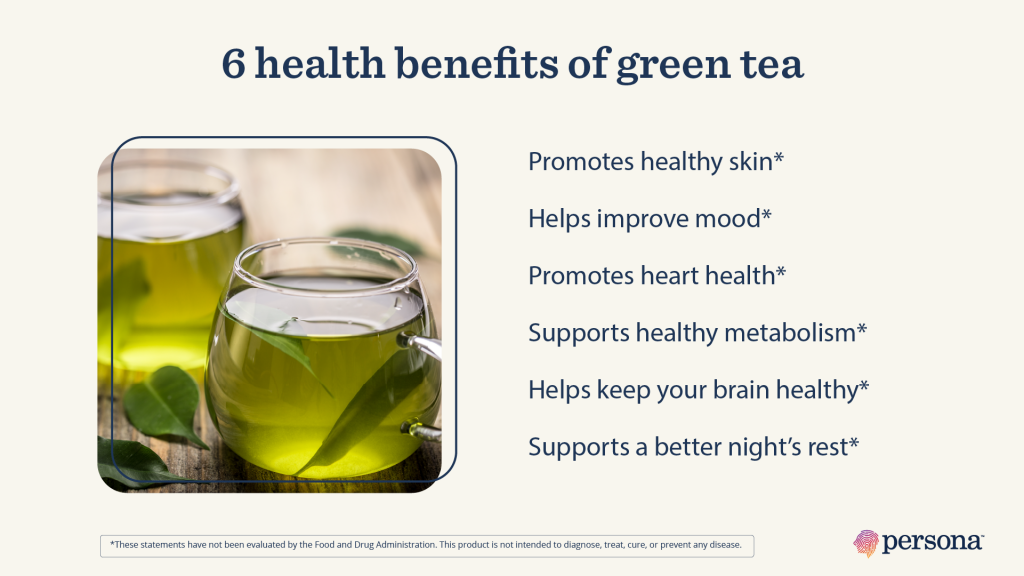
6 health benefits of green tea
1. Green tea promotes heart health*
While drinking green tea won’t make up for a poor diet or a lack of exercise, it does offer some promising heart health benefits according to some research.* Most of these benefits come from catechins, compounds with that behave like antioxidants to help stave off free radicals that can damage cells and cause illness. It’s especially high in the catechin epigallocatechin gallate (EGCG), which has been linked to reduced blood pressure and LDL cholesterol – aka the bad type that can increase the risk for heart-related conditions.*
2. Green tea helps keep your brain healthy*
If you’re feeling a little foggy or just want to focus better, green tea might be just what you need.* That’s because it contains L-theanine, an amino acid that promotes calm and relaxation on its own, and mental clarity and alertness—without the jitters—when paired with the caffeine found in some blends.*
3. Green tea helps improve mood*
Whether it’s bleak weather or life’s stressors that have you feeling a bit blah, green tea may let you sip your way to a sunnier mindset. Not only does L-theanine help keep your mind sharp, but it can also help brighten your mood*, possibly by increasing levels of dopamine and serotonin, your brain’s feel-good chemicals *
4. Green tea supports a better night’s rest*
What else can green tea’s L-theanine do? It may help lull you to sleep at night. Drinking green tea in the afternoon (yep, during the day!) can reduce stress hormone levels, helping you unwind and feel relaxed for better zZz’s.* One important caveat: be mindful of the type of green tea you choose. The amount of caffeine in most green teas is generally low compared to coffee or other caffeinated beverages so should be out of your system by night. But if you’re sensitive to caffeine, choose a blend that’s decaffeinated or has very low amounts.
5. Green tea supports healthy metabolism*
Promoting a healthy weight and metabolism are among the most talked about—and sought-after—potential benefits of green tea. The catechins seem to have a mild thermogenic effect, meaning they may increase your metabolism and the rate you burn calories, according to some research.* How much green tea is needed and how big of an influence it has is still being studied, but adding green tea to a healthy diet and regular exercise may help you maintain a healthy weight.
6. Green tea promotes healthy skin*
Looking for something to support your skin inside and out? Thanks to their potent polyphenols (a type of antioxidant), green tea may be just the ticket.* The powerful antioxidants help reduce free radical damage from stressors like the sun and pollution that can cause dry, dull and prematurely aged skin. Another benefit? These antioxidants help maintain a strong, healthy skin barrier to lock in your natural moisture for a more supple appearance. Bottoms up!
What are the different types of green tea?
Some of the most popular green teas include:
Sencha: a green tea grown in Japan that has a mild, grassy flavor.
Genmaicha: a green tea blended with toasted brown rice to give it a nutty flavor.
Matcha: a fine powder made from green tea grown in the shade to give it an umami flavor. Its fine consistency means it can be dissolved in water rather than steeped. Drinking the actual leaves this way gives you a higher dose of antioxidants in each cup.
Gyokuro: a green tea grown in the shade for a delicate, sweet flavor—considered one of the highest quality options due to its harvesting process.
Gunpowder: a green tea with a light, grassy flavor that comes in compressed pellets—one of the most popular teas in China.
Dragonwell: a type of green tea from China and has a nutty, buttery flavor.
Bancha:a low-quality green tea made from leaves and stems that give it a mild, bitter flavor.
Are there any health risks to green tea?
Like anything, green tea isn’t for everyone. If you’re sensitive to caffeine, it’s best to limit or avoid your intake, since most do contain some. Green tea is also not recommended during pregnancy or while breastfeeding due to its caffeine content. Some prescription medications like blood thinners and stimulants can have negative interactions with green tea, so it’s best to connect with your doctor if you have any concerns.
Gabby is a Nutritionist with a master’s degree in strategic communications. She loves using her nutrition-fluency with storytelling to encourage positive change. Before Persona, she worked at a mental health clinic helping clients manage stress, anxiety and other mental health issues through diet.
*These statements have not been evaluated by the Food and Drug Administration. This product is not intended to diagnose, treat, cure, or prevent any disease.
This information is not intended as a substitute for the advice provided by your physician or other healthcare professional, or any information contained on or in any product label or packaging. Do not use the information from this article for diagnosing or treating a health problem or disease, or prescribing medication or other treatment. Always speak with your physician or other healthcare professional before taking any medication or nutritional, herbal, or homeopathic supplement, or using any treatment for a health problem. If you have or suspect that you have a medical problem, contact your health care provider promptly. Do not disregard professional medical advice or delay in seeking professional advice because of something you have read in this article.
References:
Mancini E, Beglinger C, Drewe J, Zanchi D, Lang UE, Borgwardt S. Green tea effects on cognition, mood and human brain function: A systematic review. Phytomedicine. 2017;34:26-37. doi:10.1016/j.phymed.2017.07.008
Babu PV, Liu D. Green tea catechins and cardiovascular health: an update. Curr Med Chem. 2008;15(18):1840-1850. doi:10.2174/092986708785132979
Nathan PJ, Lu K, Gray M, Oliver C. The neuropharmacology of L-theanine(N-ethyl-L-glutamine): a possible neuroprotective and cognitive enhancing agent. J Herb Pharmacother. 2006;6(2):21-30.
Dulloo AG, Seydoux J, Girardier L, Chantre P, Vandermander J. Green tea and thermogenesis: interactions between catechin-polyphenols, caffeine and sympathetic activity. Int J Obes Relat Metab Disord. 2000;24(2):252-258. doi:10.1038/sj.ijo.0801101
Heart Health After 40: Tips for Women and Men Turning 40 does not mean your heart health has to decline. It does mean that paying closer attention to your cardiovascular health becomes increasingly important. As we age, certain
Rebalance Your Life: Sometimes Less Is Exactly What You Need Rebalance Your Life Through Simplifying Have you ever looked at your routine and wondered why you still feel overwhelmed, even when you are doing your best to take care
Nasal Breathing Benefits for Better Health Breathing is something we do more than 20,000 times every day, without thinking about. The way we breathe can influence how our body responds to stress, movement, and everyday demands.
Whether it’s to kickstart your morning or fuel up at midday, smoothies are tasty, convenient option packed with great-for-you ingredients. These goopy favorites come with a long list of health benefits, and with the right recipe, that can include help for your gut. Here are our 3 top smoothies for keeping your tract on track.
1. Peanut butter banana smoothie
If you’re new to smoothies, here’s an insider tip: Bananas are a must-add ingredient. Not only do they offer a slew of nutrients like potassium, vitamin C, magnesium, B-vitamins and fiber, but they make your smoothies extra creamy and sweet. They’re a perfect base that lets leave out added sugars that can inflame and irritate your gut.
Blend them together with high-protein and high-fiber ingredients like peanut butter, collagen and flaxseeds. All three nutrients are full of amino acids that help strengthen your gut barrier and promote healthy digestion, BMs and nutrient absorption. Bonus benefit: They’re slow to digest, so they keep you feeling satisfied for hours.
Ingredients
2 frozen medium bananas
2 tablespoons peanut butter
1 cup almond milk
2 scoops chocolate collagen powder
1 teaspoon flax seeds
Directions
In a blender, combine all ingredients. Blend until smooth.
2. Mango pineapple smoothie
We all know that leafy greens are packed with nutrients—from antioxidants to vitamins C, E, K, and A to gut-friendly fiber. But if you have trouble eating your vegetables, then this one is for you. Adding multiple leafy greens to your smoothies is a great way to get a variety of greens at once. The natural sweetness from the mango, pineapple and dates masks the bitterness of the greens, so you won’t even realize they’re there!
Another benefit? This smoothie includes both probiotics—live, beneficial bacteria in the Greek yogurt— and prebiotics, fibers in fruits and veggies that help fuel your gut microbiome, keeping it healthy and diverse.
Ingredients
1 cup coconut water
1/2 cup full-fat Greek yogurt
1 cup dark leafy greens (kale, spinach or collard greens)
2 dates
2 tablespoons collagen powder
2 cups frozen mango
1 cup frozen pineapple
Directions
In a blender, combine all ingredients. Blend until smooth.
Tip: If the texture is too thick, add coconut water until you get your ideal consistency.
3. Berry avocado smoothie
Literally every ingredient in this smoothie has gut-friendly benefits. Small-but-might strawberries and raspberries come loaded with antioxidants, vitamin C and fiber. Combined it with fiber-rich chia seeds and avocado, they’ll help you feel fuller longer and have smoother, regular BMs.
Ingredients
1 cup dark leafy greens
½ cup frozen strawberries
½ cup frozen raspberries
½ medium avocado, pitted
1 tablespoon honey
1 teaspoon chia seeds
Directions
In a blender, combine all ingredients. Blend until smooth.
Gabby is a Nutritionist with a master’s degree in strategic communications. She loves using her nutrition-fluency with storytelling to encourage positive change. Before Persona, she worked at a mental health clinic helping clients manage stress, anxiety and other mental health issues through diet.
*These statements have not been evaluated by the Food and Drug Administration. This product is not intended to diagnose, treat, cure, or prevent any disease.
This information is not intended as a substitute for the advice provided by your physician or other healthcare professional, or any information contained on or in any product label or packaging. Do not use the information from this article for diagnosing or treating a health problem or disease, or prescribing medication or other treatment. Always speak with your physician or other healthcare professional before taking any medication or nutritional, herbal, or homeopathic supplement, or using any treatment for a health problem. If you have or suspect that you have a medical problem, contact your health care provider promptly. Do not disregard professional medical advice or delay in seeking professional advice because of something you have read in this article.
Rebalance Your Life: Sometimes Less Is Exactly What You Need Rebalance Your Life Through Simplifying Have you ever looked at your routine and wondered why you still feel overwhelmed, even when you are doing your best to take care
Build Lasting Healthy Habits by Adding, Not Subtracting Most people begin their health journey by focusing on what to eliminate—sugar, fried foods, and carbs—but this mindset often leads to frustration and burnout. What if,
Lasting wellness is about so much more than vitamins. It’s about the countless little actions you take every day. Whether it’s adding a few greens to your dinner plate, taking a walk at lunchtime or just putting down your phone
Remember when your mom said, “Slow down and chew your food”? Turns out she was right (as usual). Whether your mom knew it or not, she was describing a form of mindful eating. That means, in essence, eating with intention, with full physical and emotional awareness and without judgment. It’s a way of eating rooted in Buddhist practice from 2,500 years ago—and it still delivers advantages today.
Let’s dive into 5 of its benefits.
1. Rediscover satiety
Although a lot of recent interest in mindful eating is about weight loss, the real value is in helping you pay closer attention to hunger and satiety. Let’s face it, when life gets chaotic, slowing down to eat thoughtfully is just not on the radar. We eat while we work, we eat while we scroll through TikTok, we eat while we get caught up on the news. Because of that, it’s easy to miss the important cues that tell you when you’ve had enough–which can lead to overeating.
If you’re gobbling a Buddha Bowl, your brain can’t keep up with your gut. Satiety—aka your feeling of fullness after eating—can take 15 minutes or more to set in. As your stomach stretches, special nerves called vagal nerves send satiety signals to your brain. And as your body digests the food and releases certain nutrients, gastrointestinal (GI) hormones send more signals to the brain that you’re full.1 Mindful eating slows you down, allowing you to feel nourished and satisfied at the right time.
2. Less digestive issues
If you’re experiencing digestive issues, mindful eating may help – the very act of chewing more thoroughly means more digestive enzymes are released to help break down food, making it easier on your gut. And you’re also less likely to swallow air, which can cause uncomfortable bloating.
Not just that, but it can help with functional gastrointestinal disorders (FGID) —a group of conditions related to stress that disrupts the brain-gut interaction – and affects as many as 40% of people globally. A Doctor of Clinical Nutrition – Christine Cherpak DCN, CNS, CDN shares a theory called the Stress-Digestion-Mindfulness Triad that after an acute stress is over, your body should return to its normal steady state called homeostasis. But sadly, that’s not the case. When you experience chronic stress, it impairs homeostasis and contributes to gastrointestinal disorders and other chronic diseases. 2,3
That’s where mindful eating comes in. Simply put, when you practice mindfulness, and by extension mindful eating, it may improve FGID such as irritable bowel syndrome and dyspepsia.
3. Better relationship with food
If you’ve ever struggled with feeling guilty after eating pie, you’re not alone. It’s a common issue, and one that’s important to address, as those negative feelings can contribute to an unhealthy relationship with food.
Mindful eating can be a useful tool for overcoming these issues: It’s all about being non-judgmental. What does that mean? Think about this example. If you felt guilty about a slice of Dutch apple pie, you may start associating pie with feelings of remorse. Mindful eating invites you to experience a new slice with fresh eyes not linked with any past feelings.
But before diving in, consider this mindful technique, “Do I even want this pie?” The idea is not to be restrictive, but aware. It means that you don’t mindlessly devour the pie but savor each bite. You might even surprise yourself and find you only eat half, when you’d normally eat the whole thing.
Research shows mindful eating may even help with binge eating and emotional eating.4 Better control of eating habits can increase self-trust and body satisfaction.
4. More fun eating
We all want to have fun—and for good reason. Doing pleasurable activities releases feel-good hormones like dopamine that help to manage stress and promote reinforcement. When you’re not having fun, healthy eating can feel like a chore.
Mindfulness can bring back those feel-good sensations by encouraging you to savor every bite. Interesting things happen when you allow the flavors of food to develop as you go. You’ll taste nuances that might have been gulped over, explore the texture and sometimes find gratitude for where it came from. By combining mindful eating with healthy food choices, you’re setting yourself up for long-term success.
5. Increased well-being.
In this modern-day cycle of stress and resulting illness, mindfulness is key to staying healthy, especially when you extend it into areas beyond eating. Could you be more mindful when dealing with a frustrating situation? Is it possible to breathe into the tension and find a moment of calm?
With greater mindfulness, it’s possible to improve your wellbeing in many respects: self-esteem, mental clarity, heart function, sleep and emotional intelligence.
Last words
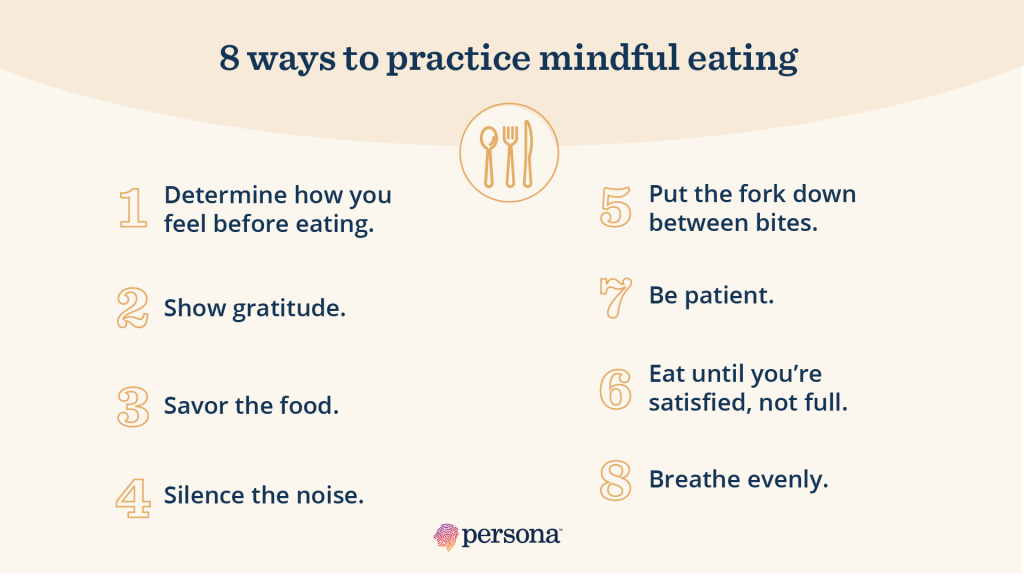
This list is just the start. Here are a few other ways to practice mindful eating:
Determine how you feel before eating. Mindful eating begins before you even pick up your fork.
Silence the noise. Turn the TV off, mute your cellphone and put down the paper. Allow yourself to be present with your food. Distractions can dampen important brain-gut signals.
Put the fork down between bites. This ties into the next point of savoring the food. You’re less likely to focus on the food in your mouth when you already have the next bite waiting.
Savor the food. Engage all the senses. Chew slowly and thoroughly. Allow the food to completely liquify before swallowing.
Breathe evenly. This allows the food’s aroma to develop better.
Eat until you’re satisfied, not full. A helpful practice is to eat until you’re 80% full.
Show gratitude. Think about the food in front of you. What went into the cultivation? Thank the person who prepared it for you.
Be patient. It may take time to get the hang of mindful eating. Or you may not be able to do it with every meal. But there is likely at least one meal in the day that you can slow down and savor. That’s a good place to start.
These techniques aren’t the only way to eat healthy; mindfulness can complement other healthy eating habits like The Mediterranean Diet or using portion control.
If you’re interested, but have no idea where to start, a clinician may be able to help by administering the Mindful Eating Questionnaire (MEQ) developed by Framson and colleagues.5
Ruby is a Registered Pharmacist, Board Certified-medication Management Specialist, and Personal Chef. She believes that whole health creates more vibrant living and is a strong advocate for integrative wellness.
*These statements have not been evaluated by the Food and Drug Administration. This product is not intended to diagnose, treat, cure, or prevent any disease.
This information is not intended as a substitute for the advice provided by your physician or other healthcare professional, or any information contained on or in any product label or packaging. Do not use the information from this article for diagnosing or treating a health problem or disease, or prescribing medication or other treatment. Always speak with your physician or other healthcare professional before taking any medication or nutritional, herbal, or homeopathic supplement, or using any treatment for a health problem. If you have or suspect that you have a medical problem, contact your health care provider promptly. Do not disregard professional medical advice or delay in seeking professional advice because of something you have read in this article.
Fikree A. Management of functional gastrointestinal disorders. Clin Med (Lond). 2021;21(1): 44–52.
Cherpak C. Mindful Eating: A Review Of How The Stress-Digestion-Mindfulness Triad May Modulate And Improve Gastrointestinal And Digestive Function. Integrative Medicine. 2019;18(4):48-53.
Heart Health After 40: Tips for Women and Men Turning 40 does not mean your heart health has to decline. It does mean that paying closer attention to your cardiovascular health becomes increasingly important. As we age, certain
Rebalance Your Life: Sometimes Less Is Exactly What You Need Rebalance Your Life Through Simplifying Have you ever looked at your routine and wondered why you still feel overwhelmed, even when you are doing your best to take care
Nasal Breathing Benefits for Better Health Breathing is something we do more than 20,000 times every day, without thinking about. The way we breathe can influence how our body responds to stress, movement, and everyday demands.
A key member of our Research and Development team, Madison has a passion for women’s health. She holds a degree in Nutritional Sciences from Texas A&M University and leverages that expertise to tackle the barriers faced by many women seeking reliable information about nutrition. Her work is to be an advocate, to help them feel empowered in their health.
I sat down and got to know her a little better.
How did you get into nutrition?
Holistic nutrition has always been a part of my life because of my mother. When she was pregnant with me, she was diagnosed with terminal cancer. She was told to terminate my life for her safety, but instead she turned to her faith and to holistic wellness—alongside her western treatments. Thanks to her determination and her openness to holistic thinking, my mother recovered and gave us both the chance at a long and healthy life, which I’m forever grateful for!
As I grew older and saw the impact that both adequate and inadequate nutrition had on the people around me, I developed an interest in the role nutrient intake has on genetic expression. I became enamored with providing nutrition literacy to people from all walks of life, which ultimately brought me to Persona!
What’s your biggest nutrition pet peeve?
I think my biggest peeve is the perception that the keto diet is safe for everyone—and that keto means eating an excessive amount of meat and cheese.
If you don’t already know, keto was first developed for children with epilepsy, and since then, has been studied to help with neurodegenerative illnesses. While keto might help in these cases, that doesn’t mean it’s healthy for everyone. Your diet should be safe, sustainable and customized to your goals, lifestyle and health needs. If you’re looking for a new diet plan, it’s best to connect with a nutritionist to learn what’s right for you.
What advice would you give to someone who’s struggling to make healthy changes?
Rome wasn’t built in a day! Research shows that habits take around 66 consecutive days to build…which can be really hard. Rather than changing all your habits at once, choose one to focus on—then move on to the next. Remember: you’re only human.
I once worked with someone who struggled with eating meals at home; they just loved fast food (who doesn’t like the convenience?). But instead of trying to change their entire life overnight, we started with just one home-cooked meal a week. Starting small and seeing success helps with developing consistency.
What’s your favorite supplement?
I love MANY different supplements, but one of my favorites has to be fish oil! It has so many applications: prenatal nutrition, brain health, heart health, immune health, eye health—it’s a wonderful fit for so many people (myself included)!
What’s your favorite snack and why?
This changes on a weekly basis, but if I had to choose right now, I would go with apples and almond butter with some cacao nibs sprinkled on top. Whenever I want something a little sweet that also has fiber, protein, healthy fats and carbs, this snack is a great way to go. Easy and nutritious!
What does your average weekend look like?
An average weekend looks like a bubble bath on Friday evening, heaps of church activities, time with family and friends at a baby shower (lots of those these days), family dinners—and wedding planning!
Tell us something surprising about yourself.
I LOVE horseback riding! Getting out in nature and giving myself some clear headspace and exercise is a must! Also, I’m marrying into an Israeli family in April so I’m currently learning Hebrew—It’s achla! ?
Reach out to Madison or one of our experts if you have questions about your supplements or program. You can also book a complimentary appointment at a time that’s convenient for you.
Why One-Size-Fits-All Vitamins Don’t Work (and What to Do Instead) As a nutritionist, part of my job is watching the shelf — in stores and online. I want to see what’s trending, what new brands claim, and whether
Staying Consistent With Healthy Habits When Life Gets Busy Staying consistent with healthy habits is one of the biggest challenges people face, not because they don’t know what to do, but because life gets busy. Most people
Stress Management Without Burning Out Even in the most well-intentioned routines, stress can quietly build over time. This is why stress management without burning out matters for long term health and emotional wellbeing. Between
No matter how committed I am to my night routine, I know my bottles and tinctures can only go so far. Because any time I don’t drink enough water or I indulge in too many cookies, I wake up with lackluster skin and lifeless hair. Caring for your skin and hair isn’t just about treating the outer layer; it’s also about nurturing it from the inside – and that starts with a healthy gut.
Read on to learn how your gut works from within to help your skin and hair hold on to that healthy glow.
The gut-skin and gut-hair connections
Your skin and hair are a good reflection of what’s going on inside your gut. Ever notice when your gut feels off, your skin is also dull? Or that you shed more hair than usual? That’s because your gut-skin and gut-hair connections are real—and part of an intricate system.
Your digestive tract is home to trillions of microorganisms—including bacteria, viruses and fungi—that together make up your gut microbiome and affect, well, everything in your body. That includes digestion, nutrient absorption, mood, immunity—and your skin and hair health. In fact, skin or hair issues are often the first signs that your gut needs a little TLC. So by caring for your gut, you’re also caring for your skin and hair.
6 ways to help your gut-skin and gut-hair connections
1. Eat a balanced diet
The best way to take control of your gut health is to eat a diet filled with fresh, varied, colorful fruit and vegetables. This helps fuel the good bugs in your gut while ensuring you’re getting the full spectrum of nutrients to keep your microbiome diverse and balanced. A healthy microbiome keeps your digestive tract working at its best so you’re able to better absorb key nutrients like vitamins C, E, zinc and collagen for your skin and hair.
2. Limit refined sugar, processed foods and other gut offenders
Just as some foods help improve your gut microbiome, others can disrupt it. Avoid any foods you’re sensitive to, as they can inflame or weaken your gut barrier. And common gut offenders like processed foods and refined sugar should also be limited. Too much sugar not only impairs your gut lining but feeds bad bacteria, throwing your gut flora out of balance. Plus, it can damage the collagen and elastin in your skin, causing it to appear duller and more prone to premature wrinkles, according to some research.
Aim to get most of your sweets from natural sugars like fruit and limit refined sugars that are found in processed and sweetened baked goods and other treats.
3. Get probiotics
If your gut feels out of whack, fermented foods or a probiotic supplement can help reintroduce good bacteria to your microbiome while edging out the bad ones. These have live bacteria to restore balance and promote a healthy ratio of good to bad bugs. A thriving ecosystem helps maintain a strong gut and helps ensure it absorbs vital nutrients.
Fermented foods like yogurt, kimchi, sauerkraut, kombucha or miso are all healthy options. To reap the most benefit, combine them with prebiotics, a type of fiber that helps good gut bacteria thrive. Some great sources include garlic, onions, bananas and apples.
4. Stay hydrated
Here’s the thing: there is literally no way for your skin to glow without good hydration. Water is essential to every function in your body, including your gut. It helps move vital nutrients and oxygen throughout your body while removing any toxins and waste. This not only increases your microbiome’s diversity but also helps your gut absorb skin and hair-friendly nutrients effectively.
What’s more, when you’re not drinking enough water, your blood pulls water from your cells, leading to dull, less elastic skin. How much water you need daily depends on a list of factors, but for most of us, a good rule of thumb is to take half our bodyweight (in pounds) and switch that number to fluid ounces (eg: a 140-pound person generally needs about 70 fluid ounces of water per day).
5. Manage stress
Chronic stress throws almost everything in your body off. Your gut, skin and hair are no exceptions. Cortisol, your main stress hormone, can cause an imbalance in your microbiome and weaken your gut barrier. It can also decrease blood flow to your skin, diverting nutrients, allowing toxins to build up and clogging pores—leading to blemishes and frail hair.
To help reduce stress, make sure you’re getting enough rest, exercising and eating a well-balanced diet. Whenever you can, make time to relax, meditate, do art, listen to music or read a book.
6. Get enough sleep
Beauty sleep is real. When you don’t get quality shuteye, notice how your skin is dry and lifeless? Sleep allows your gut and skin cells to rest and repair any damage from the day. And a lack of sleep not only interferes with your microbiome but can compromise your overnight skin repair. To wake up with glowing skin, aim to get at least seven to eight hours of beauty rest each night.
Gabby is a Nutritionist with a master’s degree in strategic communications. She loves using her nutrition-fluency with storytelling to encourage positive change. Before Persona, she worked at a mental health clinic helping clients manage stress, anxiety and other mental health issues through diet.
*These statements have not been evaluated by the Food and Drug Administration. This product is not intended to diagnose, treat, cure, or prevent any disease.
This information is not intended as a substitute for the advice provided by your physician or other healthcare professional, or any information contained on or in any product label or packaging. Do not use the information from this article for diagnosing or treating a health problem or disease, or prescribing medication or other treatment. Always speak with your physician or other healthcare professional before taking any medication or nutritional, herbal, or homeopathic supplement, or using any treatment for a health problem. If you have or suspect that you have a medical problem, contact your health care provider promptly. Do not disregard professional medical advice or delay in seeking professional advice because of something you have read in this article.
References:
De Pessemier B, Grine L, Debaere M, Maes A, Paetzold B, Callewaert C. Gut-Skin Axis: Current Knowledge of the Interrelationship between Microbial Dysbiosis and Skin Conditions. Microorganisms. 2021;9(2):353. Published 2021 Feb 11. doi:10.3390/microorganisms9020353
Danby FW. Nutrition and aging skin: sugar and glycation. Clin Dermatol. 2010;28(4):409-411. doi:10.1016/j.clindermatol.2010.03.018
Rebalance Your Life: Sometimes Less Is Exactly What You Need Rebalance Your Life Through Simplifying Have you ever looked at your routine and wondered why you still feel overwhelmed, even when you are doing your best to take care
How Stress Affects Digestion (and What to Do About It) In today’s fast-paced world, stress is more than just a mental burden; it has tangible effects on our bodies, especially on our digestive system. If you’ve ever felt your
Build Lasting Healthy Habits by Adding, Not Subtracting Most people begin their health journey by focusing on what to eliminate—sugar, fried foods, and carbs—but this mindset often leads to frustration and burnout. What if,


 Account Login